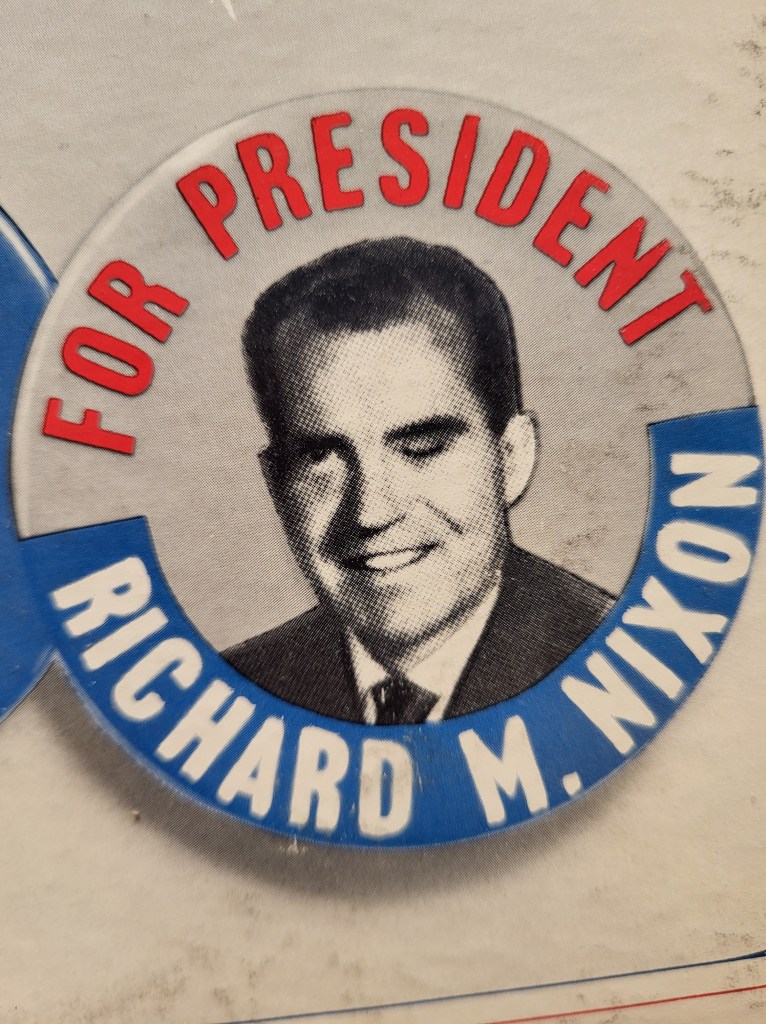
3, 2, 1…Nixon!

IN CELEBRATION OF HIS DEMISE ON ITS 50TH ANNIVERSARY


(By James S. Dwyer)
As summer enters its final stage, and before we all gird our loins for the anxious days of a presidential election in three months, it seems to me that we could all use one more official summer holiday to let off a little steam, drink a few beers, have some fun outdoors with family and honor a great moment in American history. All at Richard Nixon’s expense! Yeah, it’s a celebration that’s simultaneously overdue and right on time. After all, Nixon still owes us. Especially in 2024.
Like me, I suspect, the Fourth of July felt empty to many of you this year, falling as it did less than a week after John Roberts pronounced that the right-wing majority on the court had decided they would rewrite the Constitution and declare powers to the executive out of thin air as well as whole cloth, thus rendering a constitutionally bound president into an unfettered king, with astonishingly dubious casualness.
The announcement literally made me feel nauseated, like a real kick in the balls. It took a lot of weed, loud music and swimming over the subsequent weeks to shake the vibe. The joy of summer had been pruning-snipped, alright. I began to start longing for the holiday that so many million others are craving, which doesn’t yet exist, namely any day that finds therealdonaldjtrump@asshole.com in front of a prosecutor or a warden, facing a conviction and significant sentencing.
But we can’t celebrate our holidays before they have transpired. So, what else is there of significance, with heavy relevance, to celebrate America in the wake of the Roberts declaration of kingdependence? Surely there must be something?
Hmmmmmm. Oh, shit. Of Course!
We DO have something to celebrate this summer. Because guess what? No matter where (or if!) you were fifty years ago, there’s good reason to feel happy on the the eighth and ninth of August this year. What for, you say? Goddammit man, fifty years ago on that date Richard Milhous Nixon resigned in disgrace from the office of President of the United States. His support in congress had withered away as crime after crime was exposed during investigations that had already led to jail sentences for his closest staff insiders. Impeachment proceedings for His Nibs were just about to begin, and Nixon had been told in no uncertain terms that he didn’t have the votes to survive in the Senate, should the House vote to impeach, which they were sure to do. So, on the evening of August 8th, Nixon went on TV and said, by the by, at the end of a short speech on international affairs, that he would resign the office of the Presidency at noon the following day.
His critics had good reason to be happy that this miserable, border-line basket-case paranoiac, had been driven from office. After months of slogging through hours and hours of testimony that made for more riveting viewing than anyone had expected, even people who’d voted for him sickened at the brazen criminality and self-dealing that Nixon was shown to have engaged in.
Though I was only eleven years old at the time, it wasn’t hard to see that something interesting was happening, and the president looked like he might be going to jail. I’ll never forget, having seen him resign on live TV that summer day back in 1974, telling my father when he came from work, “Hey Dad, Nixon was on TV and he was crying!” My dad, who’d voted for Nixon, twice, was disgusted by the whole thing. “That son of a bitch should cry, he’s made this country look bad!” The sense of having been personally burned by Nixon was palpable to me, even as a kid. Fortunately, I had MAD magazine to walk me though the nuances of names and deeds of Watergate. Later that year, I paid fifteen cents for a paperback copy of The White House Transcripts at a neighbor’s garage sale and skimmed it. I didn’t really know what I was looking for, but I knew there was dirt in it. And swears! Lots and lots of swears. So many in fact that the editors of said text deemed it better to just roll with the euphemistic legalism “expletive deleted,” inspiring me to introduce a way to swear in class to my friends at school.
At the time, some said that Nixon had “been punished enough already.” Nonsense! Plenty of people become skulking paranoid alcoholics, lying to their own families, for lesser reasons than Nixon did. But all of Nixon’s suffering was of his own making, and was simply a consequence of the numerous bad choices he’d made and the criminal enterprises that he’d engaged in. The main reason he chose finally to resign rather than “hang tough” and force impeachment proceedings was to insure that he wouldn’t be punished with the fiscal hit of losing his pension ($60K per annum pension, $96K staff & office expenses, free office space & mailing privileges, and Secret Service aides!) if fully impeached. Resigning wasn’t his “last noble sacrifice” it was his last opportunity to self-serve at the public teat.
And Nixon never did apologize, either. Regarding Watergate (and leaving unremarked his other crimes) he would only offer up “I was wrong in the way that I chose to handle it.” Though he’s obliquely referring to the cover-up here, it’s easy to observe that one can also “choose” to “handle” criminal enterprises by not engineering them in the first place! Admitting the tactical blunders that led to your downfall is hardly an apology, Mr. Nixon.
Quite the opposite in fact! He later famously extemporized the bizarre “When the president does it, that means that it is not illegal” line while being interviewed by David Frost. What sort of bullshit sophistry is that, Mr. Nixon?
But, despite the satisfaction of seeing him flee in shame, the nation was ultimately robbed of the opportunity to see proof right in front of its eyes that “the system” actually, truly works, and that “all are equal before the law.” To experience the cathartic, celebratory hurrah! of seeing Nixon stand trial for his (egregious! numerous!) crimes, and possibly do prison time, would have allowed us something like a proper end to the story, the way George Washington would have wanted it to play out. It would also have served as a sort of inoculation against such future bad actors who might seek to attain the highest office. Someone like Lex Luther perhaps.
But with typically clumsy, if well-meaning, stumble-bum good-guy-isms, Nixon’s successor Gerald Ford (the only President of the United States to never have been elected President of the United States) botched the moment right from the start, that afternoon of August 9th, 1974, just after having been sworn in as President. Despite trying to reassure the nation that “our national nightmare is over” he would in fact, within days, issue the pardon that would insure that the wound that Nixon had inflicted on the heart of America would not only not properly heal, but actually fester into something worse. Our national nightmare had in fact, just begun.
For certainly we wouldn’t be where we are today, with a treacherous yet strangely unprosecutable ex-president still lurking about, threatening, fomenting, and causing incredible harm to the body politic, if Nixon had been made to bow before the law.
So, it’s bad enough that Ford deprived us of this element of the healing process, but worse, he seems to have done it for partisan reasons. He probably realized that imprisoning Nixon would doom the Republican party to the wasteland for a generation, or was counseled to that effect. I have a detailed argument to make (at some other time) that the GOP (so-called) never really got over Watergate and Nixon’s implosion, in fact lost their minds, and that brick by brick, the road to MAGA began there.
If you doubt it, ask yourself why the Supreme Court just re-litigated, without acknowledging that they were doing so, United States Vs. Nixon ? And they decided FOR NIXON! Of course, the current Supreme Court has shown little regard for precedent, so the unanimous decision rendered July 28, 1974 was a mere triviality to them. And of course they never mentioned Nixon at all, but the mealy mouthed language of John Roberts’ opinion in Trump Vs. United States in essence finds for Nixon to be allowed to conceal the tapes and prosper from his crime wave. And in those halcyon days, Rehnquist (maybe even a bigger prick than Clarence Thomas) actually recused himself due to his former close ties with Nixon (he’d been Assistant Attorney General under convicted felon John Mitchell!) Amazing.
My impression, during the Reagan years, was that the Republican party wanted to undo the social, cultural, & economic changes born in the crucible of the 1960s. I now realize that, as of Today, the Republican party is more about getting into a time machine and then going back so that they can prevent their own, initially abolitionist, party from being born and nominating Lincoln to the presidency. Or if you’re one of the Supreme Court’s leisure class radical right wingers, going back even further to redefine chief executives as having king-like powers, nostalgic for King George. Or King Orange.
So, to illustrate to those suspect jurists who favor kings that we, the American people, harbor no such longings, let us rise up in celebration of Richard Nixon’s Demise! Driven from office when his vast crimes were exposed! Even though he didn’t end up dying in prison (which I believed he should have done, and said so at the time), and even though some of what he did might even be deemed quaint when held up (down?) to the standards of the Current Republican Standard-Bearer, the fall of Richard Nixon was, is, and forever will be a victory for truth, justice, and the American way.
So go outside, light some sparklers in your driveway while you drink the beverage of your choice. What the hell, why not go nuts and light off some of those snake-things too. Like Nixon, they stink and leave a foul stain. And like Nixon, they’re still good for a laugh.
Top Records of 2021

as chosen by Jim Dwyer (co-owner of Encore Records, Ann Arbor, Michigan)


Well, 2021 was, for me, in many ways less stressful than its predecessor. Others found it to be as bad or worse, and I certainly wouldn’t argue against that position. Indeed, no matter how you see it, we’re living in strange times. 

Thankfully, a number of excellent musical offerings were released in 2021. They help to keep us sane and as balanced as we can hope to be in such times. In addition to the general prospect of hearing some uplifting and re-energizing music this past year, I also hope everyone you love has been able to get their vaccines, I truly do. 

This list will be unusual in that so much of the very good music made available via recordings this year is stuff from years past that has never been released before, or if so only in the most limited fashion. 

Does this make them “old” or “new” music? If a tree fell in the forest, and no one heard it, but someone recorded it, and then we heard it later, did it make a…oh, you know what I mean. So, I’m going to treat these as new releases rather than reissues, of which there were also an excellent bounty this year. (That’s a separate list, so, see below.)

But first, what new records did I play most frequently over the last 12 months?

Top New Releases for 2021:

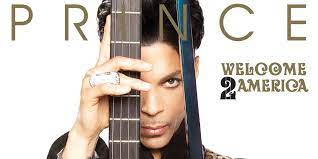
  • Prince, Welcome 2 America , (Paisley Park)
  • Various Artists, Two Synths, A Guitar (and) a Drum Machine: Post Punk Dance , (Soul Jazz)
  • The Stranglers, Dark Matters, (Coursegood Limited)
  • Can, Live in Brighton 1975 , (Spoon/Mute)
  • Elvis Costello, Spanish Model, (Universal Music)
  • La Femme, Paradigmes , (Disque Pointu)
  • RVDS, Moods & Dances 2021, (Bureau B) 
  • Sissi Rada, Nano Diamond, (Kryptox)
  • Dr. Lonnie Smith, Breathe, (Blue Note)
  • Marianne Faithful (with Warren Ellis), She Walks in Beauty , (Panta Rei / BMG)

Reissues:

  • George Harrison, All Things Must Pass, (Apple/Capitol)
  • The Beatles, Let It Be , (Apple)
  • Elvis Costello, Armed Forces Box Set (Universal Music)
  • Jethro Tull, Benefit , (Chrysalis)
  • Sun Ra, Lanquidity , (Soul Strut)
  • David Bowie, Brilliant Adventure (Parlophone)
  • Susuma Yokota, Symbol , (Skintone/P-Vine)
  • Bryan Ferry, Boys & Girls, (Virgin)
  • Echo & The Bunnymen, Crocodiles, Heaven Up Here, Porcupine, Ocean Rain (Warner)
  • Laraaji, Flow Goes the Universe, (All Saints)

Best Singles:

  • 3D RDN remix of “Deep Deep Pain” from McCartney III Imagined , (Capitol)
  • Elvis Costello & Iggy Pop, “No Flag” (Concord Records)

Honorable Mentions:

  • Menahan Street Band, The Exciting Sounds of…, (Dunham/Daptone)
  • Arundel, In Bach Vol. 2 , (Infine)
  • Paul McCartney, III Imagined , (Capitol)
  • Karen Black, Dreaming of You (1971-1976), (Anthology Recordings)
  • The Bug, Fire , (Ninja Tune)

1. It’s easy to forget, because he was so cool, that Prince was a very calculating dude. He took risks, and knew how to look ahead, in his career. Arguably the closest there could ever be to an American Bowie, Prince was easily the most talented American musical artist of my lifetime. To lose him in the same year that saw David Bowie and Maurice White exit life’s stage was truly devastating for many of us. 

With this in mind, his prescience from beyond the grave doesn’t surprise me, but it does thrill me. Welcome 2 America could have been made last month, though it’s been shelved since 2010. For those who write off Prince’s late work (let’s say, everything after 1997, twenty years into his thirty eight year run!) are cheating themselves out of much that is groovy, funky and fun. (I encourage revisiting 2015’s sorely under-rated Hit & Run Phase 1 & 2, and going backwards from there, up to where you dropped off the Princewagon.)

The music of Welcome 2 America itself is chill funk groove, interspersed with radio-bait poppers. Some might liken the vibe to that of an Erykah Badu record, for sake of an ahistorical comparison. W2A is, by turns, both contemplative and uplifting. For those of us who crave the sounds of 70s radio-soul, you may find here plentiful examples of Prince’s midwifery, shaping 70s style vibe-jams with 21st century sensibilities & production qualities.

America’s ongoing difficulties in allowing itself to come to terms with the irrefutable legacies of racial inequity and social injustice are much of the reason that the lyrics seem to be about what was happening in 2020/21. That Prince had things to say in 2010 that are still relevant now seven years later shouldn’t surprise us. That said, the jams here are solid – – there are four or five tracks here as good as anything this Artist ever gave us. Prince may be gone now, but don’t you want to hear what he still has to give?

2. Every few years, a Various Artists compilation comes along in which every single track featured makes you want to hear more from the groups you didn’t already know about. For example, Dance Craze, The Best of Ralph Records, and of course the soundtrack to Repo-Man.

Comprised of cuts from still active regional ensembles, the selection is ear-grabbing and entirely engaging throughout. Hard to pick favorite tracks here, so much strong work, but an added pleasure to see our friend (and fellow Peter Dale acolyte) Tad Mullinex offer up one of the best numbers here, as Charles Manier. 

Hooky, dancy, pulsing; as backward as forward looking, these tracks are each quite different from one another, yet compiled together they feel like fellows well met and hale, as the old saying goes. Strangely conspicuous in their absence from such a compilation however are Detroit’s Adult., and though there are probably legitimate reasons for such an omission, I’d like to hear them. Nevertheless, when playing this record in the store, someone would always ask, “What is this?” – – always a sign of a strong record.

3. Last year was a harsh one for Stranglers fans, with the Covid-related passing of their keyboard/synthesizer wizard Dave Greenfield. His unique style stood out in so many ways, and he was a defining element of their signature sound. Though the group lost a step when Hugh Cornwell left many years ago, they rebounded admirably, if not always memorably. I was very pleased, grateful even, that this new record should be so strong. Indeed, it’s maybe their best since Hugh left. 

In any event, it represents Dave Greenfield’s last recorded work, and with his passing, as well as the retirement of original drummer Jet Black in 2015, Dark Matters will likely stand as the final record by these punk/pop stalwarts. That is to say, I hope that J.J. Burnel has another record or two in him, but as the last man standing under the banner of The Stranglers, it’s never gonna be the same. The record is explicitly aware of this, even addressing it in a few of the songs.

So, while it’s a little bittersweet to wave a sort of goodbye to one of the groups that pulled me into the world of newer, edgier rock groups back in 1979/80, I’m so happy that, if so, they will have gone out on a good one. Indeed, “No Mans Land” is as good as anything on the first three records, and both “This Song” & “If Something’s Gonna Kill Me (It might as well be love)” might well have been hit singles, given any kind of exposure or “radio play” (remember that?) at all. 

Thanks, J.J. – – for seeing this through!

4. And there are to be more, and more of these live performance releases! Though I’ve named Live in Brighton as the pick for the list, late spring gave us also Live in Stuttgart, thus totaling twelve LP sides this year alone, of previously unheard live performances by Can, from just after Damo’s departure. As such, there isn’t much in the way of vocals here but the grooves are, as usual, mesmeric. There was never, before or since, a rock band as fluid in improvisation as Can. As an added plus: as I sit and absorb these jams in the comfort of my own home, I can slap on some live Roxy Music after this, and recreate in small facsimile one of my most favorite double bill listings in rock history. 

5. If like me you were unsure if this particular project made any sense, take this baby out for a test-drive before you walk away from it. It’s not only a fresh new take on an album you’ve heard a thousand times before, but it rubs your face in just how good the playing of The Attractions was, and shows to excellent effect the wealth of brilliant material that Costello/McManus was, forgive the expression, pumping out at this time. 

In a way, it’s like like hearing Om Kolthum wailing and moaning – – you don’t need to understand Arabic to grasp the emotion and heartache she gives voice to. Spanish Model, for a non-Spanish speaker, allows you to hear another voice occupy the raging passion that you know so well: you don’t need to know what she’s saying to know what the song says.  These songs are little mini-dramas, the dramatic monologue as frantic yet articulate tantrum. De-emphasizing “lyrics as meaning” allows you to hear the emotional content of the song in a new and different way.

I’m not able to understand, speak or read in Spanish, so it has fallen to my wife to note that these songs are not word for word translations, but utilize instead linguistically appropriate expressions and colloquialisms to good effect. 

And while I’m unlikely to track down any recordings by these guest vocalists, doing their own songs, there will be listeners that do take that approach. Likewise, these singers all have young fans of their own no doubt, some of whom I suspect are about to fall ass over tea-kettle into the discovery of Elvis Costello’s brilliant catalogue going back, well, for quite a nice hunk of time now.

6. La Femme have such a distinctive sound (think ‘Blonde Redhead play Ennio Morricone with Jane Birkin’), and one that I dig so thoroughly, that anytime they release a record I’m going to have to consider it a contender for a year end list. While this one runs a little thinner at the back end than the previous release (the superb Mystere), it’s still an entertaining and enjoyable record. The cover is super cool too, and not in any way pornographic (as their cover art sometimes trends.) I’m still grumbling about their show at St. Andrew’s in Detroit that I had to miss back in 2019. Wonder if I’m ever going to get that chance again. Well, here’s hoping! 

7. Real name Richard Von Der Schulenberg, so they say. Hard to describe convincingly, but chill abstract electronic beats. More moods than dances here, though that’s not a complaint. Typical Bureau B deliciosity. Perfect working or writing music for me. I look forward to learning more about the artist, and continued numerous plays of this platter. Viva Bureau B!

8. Okay, so Sissi Rada came from out of the blue and as a recommendation to me from a colleague. The peripheral involvement of Brian Eno and, more astonishingly Lena Platanos (urgent notice to you the reader/listener: Absorb her catalogue as soon as you possibly can) was an added draw. And indeed – – this is just the sort of thing I like: electronic music that’s  wistful, trancey, abstract, dancey, with female vocals and nice samples and effects. 

So who is/are Sissi Rada? Their own Discogs profile details them simply as “Coquettish-electro-doom-pop from classical music nerds.” This might, at the very least, explain the regular harp work that shows up throughout. After starting out as a sort of pop (or poppish) record, side two ends on such a cinematic tone that you feel as though you the listener have drifted away from where you were when you started the record. If I were producing a film, I’d be sending out an offer of soundtrack work to wherever these “classical music nerds” are to be located.

9. First of all, it’s sad that this will be the last album by this gifted artist. I’m partial to organ music in any genre anyways, but among jazz organists, in my estimation, Dr. Lonnie Smith has always rated highly. By measure, his playing is in equal parts soulful, funky, spiritual, rooted, exploratory, whenever it needed to be.

Second of all, it’s fair to say that he goes out at the top of his game. This combo is right up on it, and it sounds great. Bringing Iggy Pop in to guest vocal on three tracks was a superb notion on somebody’s part, but to have him sing Timmy Thomas’s “Why Can’t We Live Together?” was sheer genius. Also, I never realized that I needed to have a record of Iggy singing “Sunshine Superman” before hearing this. Make a mental note to pull this record out and play it for your dinner guests when having a few friends over to the house for an evening is safely back on the social calendar, sometime in the summer of 2022. They’ll truly dig it.

10. Marianne Faithful has had to be tough to survive for quite some time now. The fact that she survived pre-vaccine Covid seemed a miracle. But she is one powerful life force, this Grand Dame. And  She Walks in Beauty has a power unlike any other record on this list. 

The review of this record on Pitchfork wisely noted that “at its best, She Walks at least gestures toward something greater, an unusual merging of lieder and ambient music” but then goes on to grumble that over the four sides, the record feels like an overlong poetry reading. Admittedly, “The Lady of Shallot” runs long (Tennyson in general is a drag ), but Pitchfork misses the point of the content by focusing on the format of its presentation. The lyrical content is so densely compact in these pieces that to try and absorb more than a few poems at a time is not advisable. 

One side at a time, sit down with this recording. Follow along with the text, and savor the actorly skill that she inhabits the language with. Faithfull has always been smarter than people generally expected, and intellectually, knows this material well. I dare say her readings are so well informed with the living of these sentiments, that these performances would make Keats, Byron, etc. themselves weep. She certainly hit me in the gut a couple of times here!

This is one of the very best spoken word recordings in several years. The music beds are awash in texture; understated yet fully supportive of the material they ferry. Highly recommended to romantics and poets of all ages.

Regarding Reissues:

1.Finally, ATMP sounds rich, full, uncluttered and clear. Wealth of alternate takes and the variety therein truly wonderous. George was deep, and the bounty is a real treasure.

2. I wish everyone involved had paid more attention to what Glynn Johns thought!

3. The Armed Forces boxset deserves credit just for the packaging and goodies alone. The wealth of live material and other bonus tracks from this still early, explosively creative phase of Elvis’s career are also noteworthy. This guy will always be The King of the B-Side!

4. Probably my favorite album by this group, it’s the launch pad to more ambitious things just around the corner. The live stuff is lots of fun. Maybe too many mixes of “Teacher” though?

5. Mister Ra at his finest. This record virtually saunters into your room. Dig it!

6. Bowie’s Outside is a late masterpiece, for sure. And Earthling as well as Hours  are entertaining variations on what a Bowie album could be. That said, like me, you probably never realized how strong these other titles were. None of these are your favorite Bowie record, but they all are damn good, and certainly worthy of your re-consideration. 

7. Lovely, electronics with classical musical samples at the structural base. Unique.

8. One of his best solo records, and a big sentimental favorite for me & mine!

9. Something went wrong after these first four albums, but these just happen to be four of the best British rock records of the early 80s. I guess they burned brighter than long.

10. With the Eno-produced Day of Radiance (AKA “Ambient 3”) my most heavily played Laraaji recording over the years. First time on vinyl. The sidelong track that opens this set is worth the price of admission alone. 

– – Jim Dwyer, February 28, 2022.

Dome Drooms

When subtleties eclipse the moon with sap
from trees made into brooms, trapped whispers roam
into the vaults of vast cathedrals, slap
right back as louder groans, the backs of domes

make booming waves of amplification.
This i learned by laying on the floor while
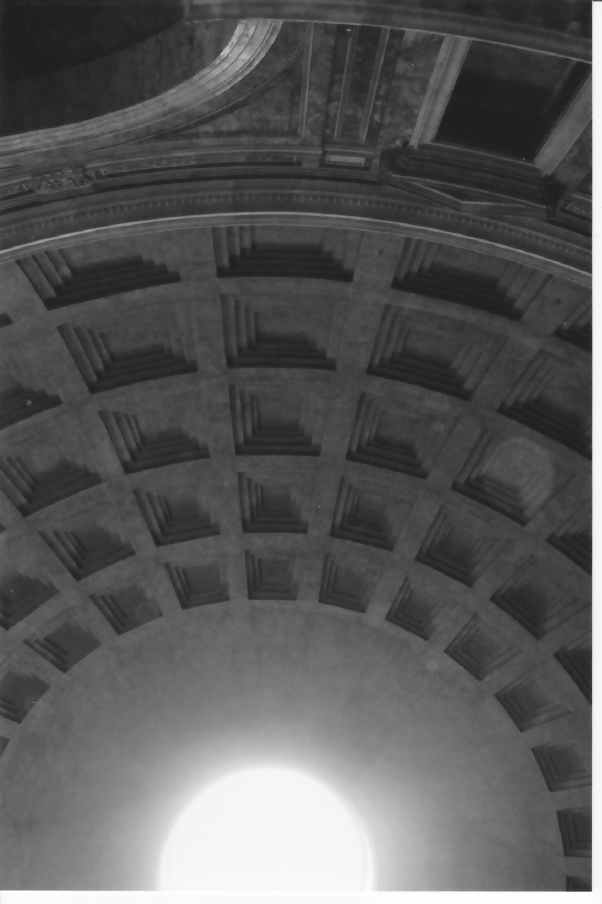
on Roman vacation. Less Pantheon
than pan theon, calling all gods! Erstwhile 

notes left hanging, do not leave the room, float
effortlessly, unstrained, distance claiming.
Our ears, like outstretched hands to hold the note
and hear the thing completely, are ringing.

Mote of dust in diving bell, dust my brooms
indeed: it bodes well, the space in domed rooms.

– -by James S. Dwyer, July 2021

King Crimson: 1969 Box Set

1969: King Crimson’s Annus Mirabilis, Or – – 

Why You Really Do Need To Buy This Box Set Even Though You’ve Already Bought This Album At Least Twice Before

By Jim Dwyer

I told myself I wouldn’t write about this newish box set until I’d listened to the entire collection of 27 (yes, 27) discs. But then I kept playing disc 7 over and over. And louder and louder. And I’ll tell you right up front that you need these live versions of “Mars” (from Gustav Holst’s The Planets) more than you realize. Especially if you like music that crosses the line over and thrusts deep into evoking true chaos and terror from time to time. Only “L.A. Blues” by The Stooges or vintage Wolfeyes live can equal the utter sonic ferocity in the attack that King Crimson Mach 1 was able to stir up with their peformances of this particular piece.

I have since moved on and made my way through more and more of this content and it bears repeating: this is one of the tightest bands that has ever existed. Precise, yet fluid. As ready to drift into atmospheric meanderings as they are poised to attack, their dexterity is most impressive. There’s even a moment on one of the earlier live recordings where you can hear an audience member gasp, “Oh my God!” during that brief pause after Fripp and drummer Giles rip through the first buzzsaw-fast-interwoven-drum-and-guitar run that is the centerpierce of “21st Century Schizoid Man.” That means a lot to me, because it’s exactly what I shouted to my friend Jeff about a minute into “Discipline,” (the first thing they played upon taking the stage) at Ann Arbor’s Second Chance in early 1982. That was only the fifth or sixth concert I’d seen, and the first smallish-venue (SC had a capacity, it is said, of 649) and it’s still the best live music performance I’ve ever seen. 

Another “little” moment that caught my ear in this new package is when Fripp casually whips off the little Spanish guitar note cluster which precedes “The Continuing Story of Bungalow Bill” on The Beatles White Album as a lead in to the “Improv – – Travel Bleary Capricorn” number at the Fillmore West December 13th show, deftly curtailing itself with a lounge pastiche. Then, “Mars” creeps up!

Regarding the mutliplicity of versions of the legendary debut album (2019 mix, 2012 mix, alternate mix version, instrumental version, etc.) I have to say that I was most pleasantly surprised with the instrumental version. In a group that never really had an ideal singer, and with lyrics that sometimes seem to over-reach, to hear these songs with no singing whatsoever was strangely refreshing. Not only did it allow me to become the King Crimson vocalist I’d always dreamed of being (ha-ha, though I did nearly rush the stage when Adrian Belew, exhausted I suppose with singing while having to play rough time signatures, jokingly called from the stage for “someone out there to come up here and sing this thing” as they tipped into “Thela Hun Ginjeet” at Pine Knob in 1984) but even better it gave me the chance to really head-phone it up, sit in a (yes) darkened room, and savor the sublime interplay of this most remarkable ensemble. That being said, Greg Lake is really quite good here, on all of the live stuff. I might dare say, never better, in fact. 

And regarding Crimson lyrics: it’s powerful strange how apt & relevant the lyrics are from this first record to our present-day 21st century schizoid world.

So, though Lark’s Tongue in Aspic and Discipline are my particular favorites by this mighty group, this densely packed overview of King Crimson in 1969 is a watershed moment in Rock History. Certainly, if they’d never made another record beyond In The Court of the Crimson King, their place in the books would be secure with this mighty salvo alone.

There might be a handfull of discs here that you might only ever play once, but I’m telling you, the live stuff is thrilling, gut-wrenching, exquisite and abrasive. Loud, assertive and persuasive, there had never been anything like it before. And very few groups in rock have ever approached this level of play ever since…

Ceaseless Humming

The ceaseless humming of the highway drone,
from afar: through my windows, through the corn
fields, miles, acres, acres; no wheels yet of my own.
American: to the motor-way born.

The need to feel the grip of tires on road
like the nervous tapping of a finger,
is such that if not entertained, explode
is what it might & so, let’s not linger.

The thrill of swift departure, letting go
of duties, obligations, roads that are
rote! With “V” windows vented, good air flow
allows us to smoke at top speeds, the car

as Saviour. Don’t need to leave to feel free,
just feel free to leave: to go is to be.

By James S. Dwyer  (6-6-2021)

A Note About Sonnets:

So, over the years, the sonnet (the fourteen line poem with ten syllables per line, more fully defined below) has become one of my favorite forms. Though they may take an hour or so to construct, they can be read quickly, and if they are well crafted, can reveal layers of meaning with multiple readings. In our era of short attention spans, they seem ideal for a creative writer seeking readership, and for a reader seeking a well-penned and thoughtful yet brief contemplation in verse.

What I’ll be offering here at The Cuttingsville Times are recently composed English style sonnets. That is to say, using the same rhyme scheme that Shakespeare employed in his amazing bundle of 150 or so sonnets, first published to zero immediate acclaim in 1609.

Of course, though I almost certainly smell better, I readily admit I am no Shakespeare. That said, I’m not ashamed to say I’m no slouch either. I have been actively engaged in the writing of sonnets as a matter of choice for many years. I have even been teased for my adherence to this form, once by the ostensibly noted-poet Diane “waka-waka” Wakowski. (This was back in the early eighties, during my participation in poetry readings that she ran on the campus of Michigan State University in East Lansing at that time.) 

“Why do you choose to limit yourself to this kind of rigorously structured, even archaic, format?” I was asked.

I had to laugh. Busted, by the Poetry Cops! 

Would it have been worth the breath necessary to have explained that, gasp, I actually enjoyed the challenge of adherence to metrical rigor? Don’t get me wrong, I enjoy writing lyric poetry and free-verse too, but for me, the sonnet seems an ideal form: the confines force a concision, and between end-rhyme and syllable scan, one must sift and seek for the very word to complete any given line. I also enjoy the self-contained debate that occurs within the fourteen lines: the front end of a sonnet presents a narrative, states a proposition, considers a problem, or raises a question. The back end of a sonnet comments on the narrative via an abstract comparison, or it applies the proposition, resolves the problem, or answers the question. In fourteen tight and tidy lines. 

I’ve long argued that Twitter has really delivered nothing of real merit, for all its noise and bluster. Sonnets seem to me an infinitely superior form of public communication. Immediacy isn’t always for the best; epiphanies require a moment.

While Shakespeare’s sonnets famously appear to have been directed to a few specific persons, and although metaphysical in tone are for the most part relationship related in subject matter, mine cover a broader terrain. I will offer meditations on the natural world and the world of ideas. My sonnets touch on philosophical ponderings, or the qualities of the very elements themselves, just as often as they consider specific happenings in our current-day-what-in-the-fuck world that we’re all soaking in. Some of my sonnets are serious, even angry. Others might be silly, or playfully disrespectful. 

It is believed that Shakespeare wrote the bulk of his sonnets during a time when the theaters were shut down due to the re-emergence of plague in London. 

Thus, at the onset of the Covid Pandemic in early 2020, and with the free time I would have on my hands with the closure of my work-place, I resolved to spend my time as Shakespeare had in his own pandemic lockdown: Stay busy, stay positive, keep writing, and try to crank out more sonnets than usual.

Sometimes they seem to fall into place right in front of your eyes, as though they were writing themselves. Other times, like a tough cross-word puzzle, you write yourself into a wall, and have to put the thing down for a few days, and then return to it with the requisite insight and then walk it through to its conclusion. I usually have a half a dozen or so irons in the fire at any given time. Some will emerge complete, others, not making the grade, will stay in shadows. Since I’m able to generate on average two sonnets a month, and now have a healthy backlog of what I feel to be printable work, it is my intention to release a new sonnet every couple of weeks here at thecuttingsvilletimes.com

I hope you will enjoy what you find here, and share them with others. I have spent my life writing, never for money, but because I love it. I seek not acclaim but to share my observations and occasional insights, wittily or whimsically expressed, with anyone else who finds such wordplay-paintings worthwhile or even enjoyable.


At this juncture, I’d like to officially thank my high-school English teacher, the late, great Anthony Sutton (Lumen Christi High School, Jackson, Michigan) for not only showing me how to become an effective teacher myself, but for setting me on my path as a young writer with intellectual proclivities, and introducing me to the writers who would become my greatest influences (Joyce, Hopkins, Blake, Shakespeare, Old English poetry). Though some of these poems will be dedicated to a particular person from time to time, I dedicate this entire enterprise to Sutton – – he’s stompin’ the poetic terra of Valhalla, now.


Sonnet The sonnet was developed in Italy, probably in the 13th century. Petrarch, in the 14th century, raised it to its greatest Italian perfection and gave it, for English readers at least, his name. The form was introduced into England by Thomas Wyatt, who translated Petrarchan sonnets and left over thirty of his own compositions in English. Surrey, an associate, shares with Wyatt the credit for introducing the form to England and is important as an early modifier of the Italian sonnet. Gradually, the Italian sonnet pattern was changed (let’s be blunt – – rhyming in Italian is like falling off of a log), and, because Shakespeare attained fame for the greatest poems of this modified type, his name has often been given to the English form. Among the most famous sonneteers in England have been Sidney, Shakespeare, Milton, Wordsworth, Keats, D. G. Rossetti, E. Barrett-Browning, Hopkins, Meredith, and Auden. Longfellow, E.A. Robinson, Frost, and e.e. cummings are generally credited with writing some of the best sonnets in America.

The sonnet is almost invariably fourteen lines and following one of several set rhyme schemes. The Italian form is distinguished by its division into the octave and the sestet, the octave rhyming abbaabba and the sestet cdecde, cdcdcd, or cdedce. Iambic pentameter is usual. In the English sonnet, four divisions are used: three quatrains (each with a rhyme scheme of its own, usually rhyming alternate lines) and a rhymed concluding couplet. The typical rhyme scheme for the English sonnet is abab cdcd efef  gg. 

In essence, the thematic pivot occurs in the ninth line, regardless of the octave/sestet or quatrains/couplet nomenclature. This is the point at which the poet begins to answer the question, resolve the problem, draw the conclusion to the matter posed or expressed in the first eight lines.

(This definition, with a few modifications of my own, has been taken from Holman & Harmon’s A Handbook to Literature Sixth Edition, MacMillan Publishing, 1992.)


(For further consideration of the history of sonnets, the possibilities inherent in the form, and Shakespeare’s masterful manipulation thereof, consult Helen Vendler’s very fine The Art of Shakespeare’s Sonnets (Belknap/Harvard University Press, 1999). It is highly recommended.


by James S. Dwyer,

May 29, 2021

(All fotos by James Dwyer. The stone steps are in the Maretllo Tower at Sandycove in Ireland.)

Goaled Miners

The dark of the hole, the hole in the ground,
the shuffling of feet, work week after week;
the hole in the earth goes endlessly down.
Weak, getting weaker; the strong, getting weak,

the canary has broken the tip of
its beak in rattling its cage. “Get me out!”
it seems to suggest in its rage; “Above
is where air is, so why are we here?” shout

the voices of miners, muffled in fear.
For they need to pay rent, so they dig holes,
lungs filled with dust harvest future smog-smear.
But these jobs must end, for all men have souls:

Working in air, in the sight of the trees,
Let’s retrain coal-miners to work with bees!

May 5th, 2020

by James S. Dwyer


Image credits

beekeeper: https://bangordailynews.com/2019/10/20/homestead/meet-this-7-year-old-beekeeper-whose-passion-for-her-hobby-matches-that-of-any-experienced-adult/

coal miners: https://theconversation.com/black-lungs-back-how-we-became-complacent-with-coal-miners-pneumoconiosis-57718

coal: https://www.theguardian.com/environment/commentisfree/2019/sep/24/australia-has-dodged-global-attention-on-fossil-fuels-because-of-assiduous-diplomatic-efforts

honeycomb: https://www.fluxmagazine.com/honey-based-products/

Top Ten LPs of (accursed be its name) 2020

As Selected by Jim Dwyer, Co-Owner Encore Records in Ann Arbor, Michigan:

Top Three Titles of 2020 (Yello, Deadbeat & Paul St. Hilaire, Juana Molina)

The less said about 2020 itself, the better. I’m very happy that you survived and are reading this list, hopefully in good health! As bizarre and difficult a year as it was to endure, there were some good things that will come of it, and many fine musical offerings were released during it. The loss of live shows has been a painful demonstration of just how vital they are in our communities. But we should also thank goodness for recorded and live-streamed music over this past year: It’s kept us all as sane as we may be, to be sure. 

I base my rankings on “how many times did I play it, at work and at home? Was it impossible to remove from the turntable at any point and for how long a stretch?”  Anything else would be sheer preference (“I really like this artist!”) and a different kind of list. 

Top Ten ReIssues is a separate listing and is not usually limited to a strict ten!

1. Yello, Point (Polydor)

2. Deadbeat & Paul St. Hilaire, 

Four Quarters of Love & Modern Lash (Another Moon)

3. Juana Molina, ANROML Live in Mexico

4. The Stooges, Live at Goose Lake (3rd Man)

5. Adult., Perception (is/as/of) Deception (Dais)

6. Hans-Joachim Roedelius, Selbsportrait (Bureau B)

7. Pantha du Prince, Conference of Trees (Modern Recordings)

8. Dezron Douglas & Brandee Younger, Force Majeure, (IARC)

9. Paul McCartney, McCartney III (Capitol)

10. Arandel, InBach, (infiné)

1. The fact that Yello are still at it, and putting out a record this fine, is cause for rejoicing. “Hot Pan” stands out here as an instant classic, the equal of previous highlights surely. In the concert-less year of 2020, Mars & I (that’s my betrothed) selected Yello’s Live in Berlin (2017) blu-ray for our New Year’s Eve home dance-party, and the dream of seeing Yello live sometime in the future (even if we have to fly to Europe to do so) is just one more reason to keep thrashing about here on the planet of the doomed. No worries – – we can dance with “The Vanishing of Peter Strong” into another dimension. 

2. Thankfully, this has recently been re-pressed. Copies disappeared immediately upon release. Only 500 copies were available initially, and no CD available, alas. Copies are back in stock now, & it’s well worth seeking out! Atmospheric, rasta-chant, dub poetry calling for equal rights. It was the soundtrack for the summer of George Floyd/BLM marches. Powerful, righteous, chill but incisive and deliberate. You’ll play one side at a time, over and over and over.

3. What a treat this record is! Infectious, hooky, punky energy right out the gate, and it beguiles throughout. Mars & I saw her perform at Le Poisson Rouge in NYC, 2014, and were dazzled with her dexterity in interweaving effects, loops, etc., all while playing and singing as though effortlessly. Recorded in Mexico just before the early pandemic lockdowns in March of 2020, it just might be the only live album from that fershlugginer year. So, break out a copy and go to the show. I hope this exciting record becomes her Cheap Trick Live at Budokan! It certainly deserves to be.

4. Ann Arbor’s finest. A legendary performance, thought lost forever, and recently uncovered. The true beginnings of punk and avant-garde noise rock, with the always hilarious Iggy as frontman to keep things from getting too serious (his comments about “that one guy” in the crowd are most amusing). The supposed rip against this particular performance was that bass player Dave Alexander was out of his mind stoned, and indeed, he does just barely play on the first two numbers. Still, he’s fine after that, and on the two cuts where the bass line truly centers the riff (in both “Dirt” and “Funhouse”), he’s on top of it. And hey, if this is The Stooges on an off day, well Sweet Jesus Creamcorn, what a thing to behold an on day must have been. 

5. The best group in Michigan for a little while now. Edgy electro duo with dark angsty super propulsive dance music, crunchy and catchy. Funny & cool that it was largely recorded in Michigan’s wooded “lake country” near my family’s vacation spot “up North.”  Adult. are not to be missed live – – our daughter Lillian drove all the way back from Pittsburgh with a friend for Adult.’s “Banger in the Hangar” show which turned out to have been a legendary gig. 

6. The surviving half of the German electronic pioneers Cluster is still active and prolific, now well into his 80s, with distinctive melodies and catchy electronic arrangements that surprise in how much emotional content they convey in their seeming simplicity. I have come to calling Roedelius “my favorite living composer”, with his remarkable skills in melody, mood and invention. This was one of the better reading/writing records of the year.

7. Melancholy, pulsing ambient, mostly instrumental. Nice use of bells and gongs for organic tones, great working around the house music. Eno-esque in its dipping into  mood/nostalgia-tones, albeit energetic enough to invoke movement and activity. Good also for chill times, this was my “letter writing music” in a year that saw me trying to send more written, mailed correspondence to loved ones.

8. These performances (Douglas and Younger are a bass & harp duo) were originally a podcast, a “Covid concert from our apartment” and the spoken hellos and goodbyes are themselves heart warming. But the emotional richness of what they’ve done here is exceptional. Only two of the songs are original compositions, but their choice of cover material is inspired. Everything from Coltrane (Both Alice & John) to The Stylistics, Kate Bush and Sting. It was their cover of the old Sesame Street song “Sing” that really hit me, though. Kind of a syrupy, even dorky song, right? I was in first grade when Sesame Street began, so it was nostalgic enough, but the lyric took on charged meanings in the context of a pandemic year and filled my heart with love & hope & joy & yes, my eyes with tears. Thank you, Douglas & Younger…

9. There are a handful of LPs that could’ve snagged this spot on my list (to be identified perhaps in a later listing) but I give the nod to my boyhood hero, still making noteworthy records 59 years into his career as a recording artist: Paul feckin’ McCartney. A few listens to McCartney III will make clear that this is a fellow who really enjoys the recording process, and with these self-constructed (for the most part) numbers there’s a sense of actual play in the playing. I mean, to be this stylistically versatile and melodically inventive at nearly 80 years old is really something. I’d say that his his releases here in the 21st century are among his finest post-Beatles work.  Initially, LP copies of this were hard to come by, which seemed to add to the holiday-time excitement, just like Beatle LPs in days of…yore. McCartney II is still my top fave from Paul, but this new one gets better with each playing.

10. I like to try and have at least one Various Artist title on my year-end list whenever I can, just to cram as much variety in as possible! Of several good ones this year (it could be another, oh say top 5, list) this is the one that I played the most. It’s all reimaginings of pieces by Bach that combine electronics & vintage-instruments from Bach’s era! The version of the “Passacaglia” alone is worth the price of admission, but the vocal stuff, done in a style that reminds me of The Swingle Singers (whom I dig!), turns the cantata excerpts into pop-like earworms. 

“Praise unto the Universe for & with, Music!” – –  Jim Dwyer